
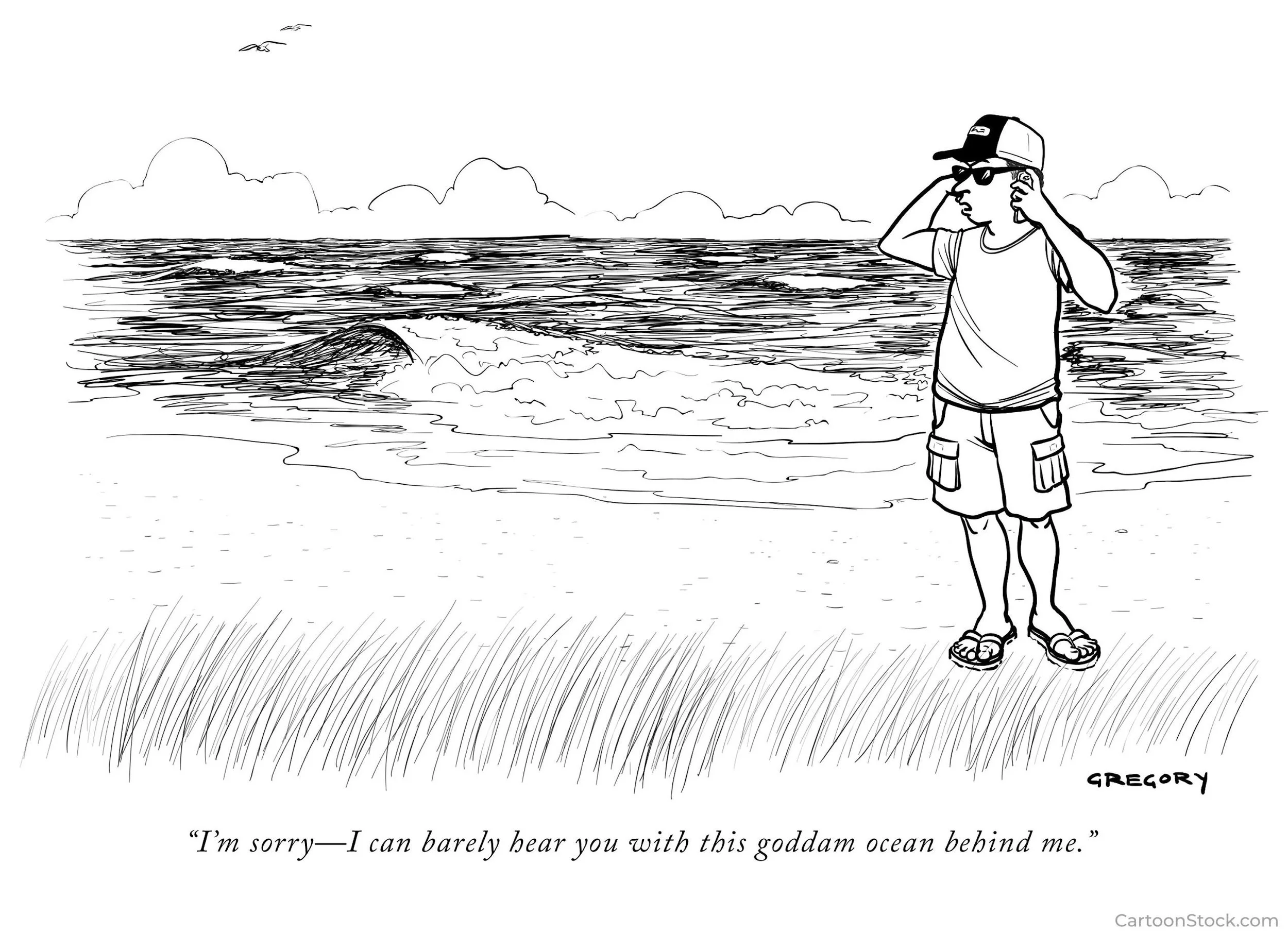
Have you ever taken a work-related call while strolling on the beach, while about to embark on your long-awaited vacation, or even at the dinner table? What many of us need today is a clearer boundary between work and play.
Let’s talk about that, what we all refer to as work-life balance. How does one define it, accomplish it?
We’ve all worked with colleagues who claim they were the ultimate successful and productive multitasker; they are on an email chain, a Zoom call, and a phone call, all simultaneously. It sounds good until it isn’t. Their contributions to the email chain become erratic and nonsensical. Not a good look among professionals. What about dinner out with a work colleague? Do you take calls from others? What about those of us who work on a computer during lectures, responding to emails, editing manuscripts (I certainly have been known to do that!)?
I once knew a consultant who worked 10 to 12-hour days. He decided to try volunteer coaching for a track team and had to cut back on his hours, go in earlier, and leave work by 3:00 to get to practice. With his new tight schedule and the desire to coach, he found he worked less hours but was more productive than he had ever been in his career. It simply took focus, organization, and passion to get him to that point. He worked, and then he played!
So what do the experts say about multitasking and about work-life balance? Studies repeatedly show that human multitasking is simply an illusion. It results in a 40% drop in productivity and higher error rates. This is primarily because the brain switches rapidly between tasks and does not process them simultaneously. Multitaskers suffer from decreased attention spans, reduced memory, and higher stress levels.
And what about that cell phone on the beach? When can one simply enjoy nature, enjoy the company of others, engage in meaningful conversations about life, play a sport? Studies have shown that good work-life balance reduces burnout, improves mental and physical health, and increases productivity. Conversely, poor work-life balance leads to stress, chronic illness, depression, anxiety, and poor job satisfaction.
I invite you to examine how you spend your time. When you step away from work, whether at the beach, playing your favorite sport, traveling, or simply spending time with loved ones, are you truly present?
And, I leave you with an apt quote:
"Never get so busy making a living that you forget to make a life." Dolly Parton
Drawing the Line: How Clear Boundaries Improve Work and Life
Previous
Previous
The Weight of Perfection: How Surgeons Need to Give Themselves Grace
Next
Next