
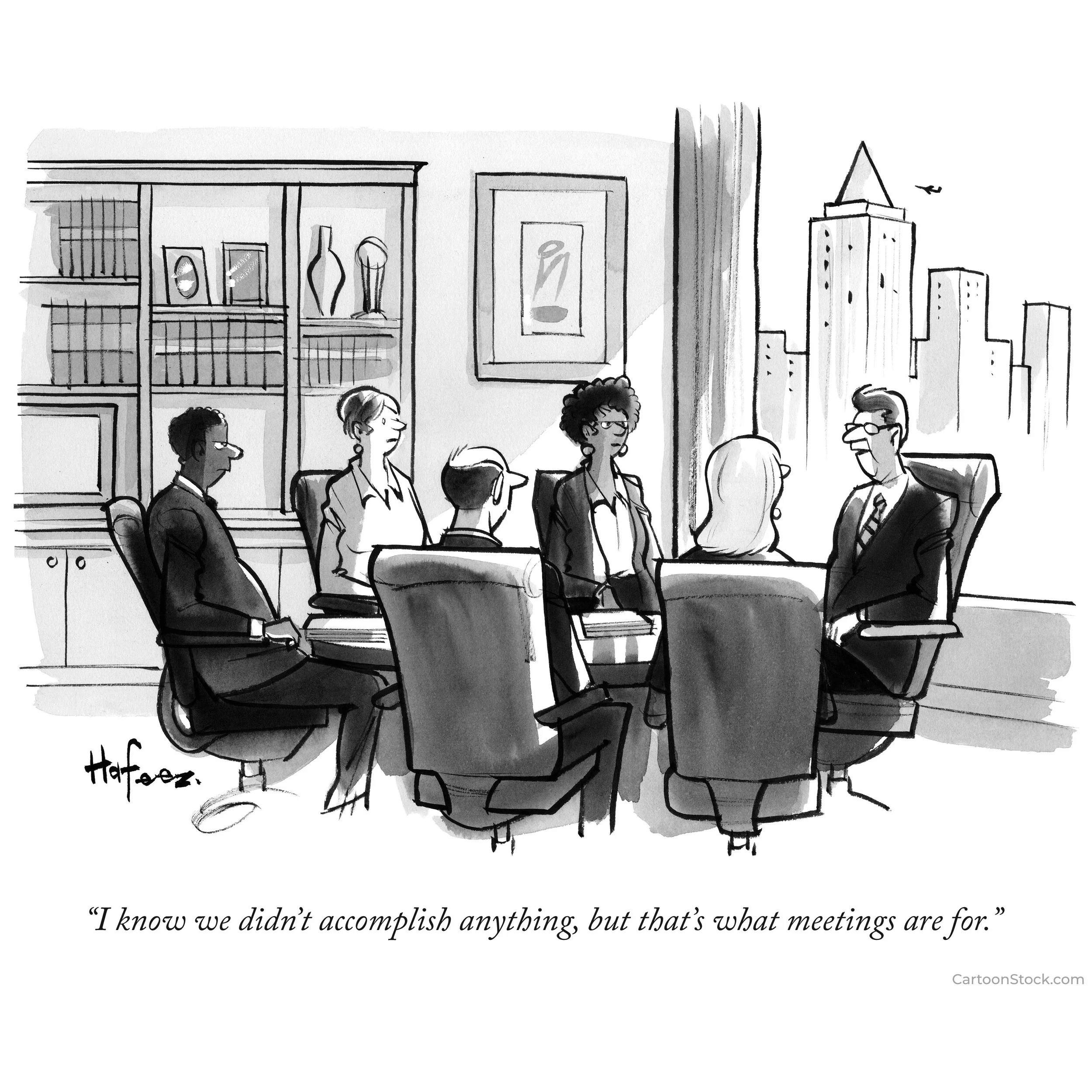
Have you ever walked out of a meeting thinking, “Well, that was a complete waste of time”? I have, especially after meetings with purely informational agendas. Information can often be conveyed in a simple email.
Or what about meetings where discussion and planning were on the agenda, but the outcome was unclear? In contrast, have you attended a meeting and walked out thinking, “Wow, that was really productive and enjoyable. I understand its purpose and our direction”? So, what makes the difference?
How does one run a meaningful and productive meeting?
First and most importantly, decide what the purpose of the meeting is. What is the endgame?
Second, determine who should participate in the discussion and decision-making. How should they participate? For example, one person may share the program’s finances, another may present the marketing analysis, and another may represent a particular group or perspective.
Decide the format. Will there be a formal presentation, breakout sessions, panels or simply a roundtable discussion? Do you need a facilitator? Should outside experts be included? What audiovisual support is needed? How should the seating be arranged?
Prepare both yourself and the participants in advance. How will you communicate the purpose and expectations of the meeting? What should your message be?
Consider how you will conduct the meeting. How will you encourage participation from everyone while preventing a few people from dominating the conversation? What will success look like? Prepare for difficult conversations or unexpected disruptions. Start on time, end on time and clearly summarize the outcome.
Finally, be sure to send a summary to everyone involved.
As you can see, a successful meeting often requires nearly as much preparation as the meeting itself. Be thoughtful and purposeful about both the planning and the meeting. Then enjoy the experience; a well-run meeting is truly a joy!